
Book review · A reader’s perspective
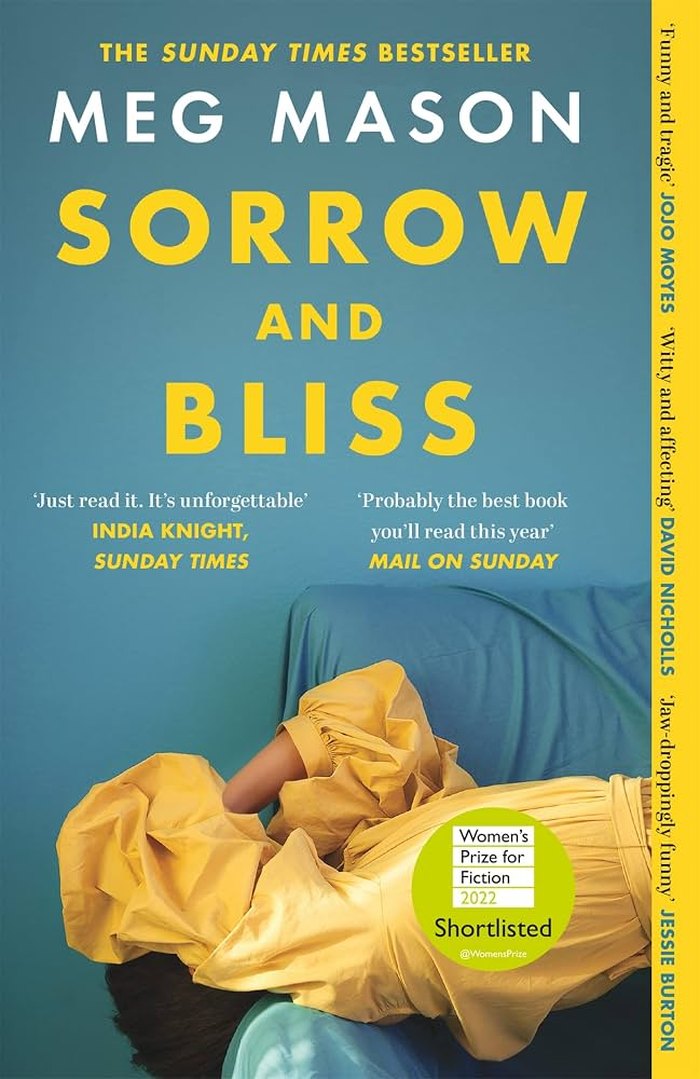
Sorrow and Bliss by Meg Mason
by Lekshmi Baskar
Sometimes, the person who knows us best is also the person we find hardest to explain ourselves to.
Genre
- Contemporary literary fiction
Categories
- Family and relationships
- Mental health in fiction
Mood
- Tender
- Emotionally heavy
- Darkly funny
That tension runs through Sorrow and Bliss. At forty, Martha Friel has separated from her husband, Patrick, and returned to her parents’ house in London. She has lived with mental illness since she was seventeen. Looking back over her childhood and marriage, she tries to understand how her life reached this point.
Set in London and Oxford, Sorrow and Bliss follows that attempt. There is a love story here, alongside a sisterhood full of rude jokes and a family whose artistic talents don’t make them particularly good at looking after one another.
Martha can be exhausting company. She notices other people’s absurdities quickly and speaks with a sharpness that can become cruel. Because she tells the story, we have access to the pain behind her behaviour. That closeness can make you feel protective of her, then uncomfortable with what she says to someone who is trying to help.
Patrick has his own history of loss, although Martha’s account can make it easy to overlook. His steadiness is part of what draws her to him; later, she experiences his attempts at reassurance as a failure to understand. Their marriage becomes painful to watch because affection survives alongside resentment.
Ingrid, Martha’s younger sister, brings a different kind of intimacy. Their messages and private jokes have the ridiculous shorthand of people who have known each other forever. Ingrid can be blunt with Martha without every exchange becoming a solemn conversation about her illness. Their closeness makes the strain between them matter.
Behind both sisters are Celia, their sculptor mother, and Fergus, their poet father. Their childhood gives the novel much of its eccentric humour, as well as some of its unhappiness.
Mason’s writing is direct and dryly funny. At a wedding near the beginning, Martha compares Patrick to the sofa she grew up with: his presence has always been a fact of life. It is an affectionate joke, but it also suggests how easily she takes him for granted. A small remark tells us something about the marriage before Martha explains it herself.
The dialogue entertains us while revealing something the speaker may not fully recognise. The reader has work to do.
The story moves through short scenes and memories, gradually filling in the years behind the separation. Its momentum comes from revising our understanding of people. If you enjoy noticing how an earlier conversation changes meaning once you know more, this structure gives you plenty to follow.
One detail matters before you read: Martha’s illness is deliberately unnamed. Mason has explained that she invented aspects of the condition and did not want to present it as an accurate portrayal of a specific diagnosis. She also wanted readers to see Martha as a whole person. Although its voice can feel confessional, the novel is not autobiographical.
Is it your next read?
Why read it
- Read it if you enjoy intimate family stories, difficult narrators and humour that can leave you wincing. Book clubs will have plenty to discuss about marriage, sisterhood and the limits of patience.
- Read it for the changing view it gives you of its characters. Sympathy for Martha does not settle what Patrick or Ingrid should be expected to bear.
Save it for later
Save it for another time if you want a comforting romance, frequent plot twists or distance from emotional distress. The book includes severe mental illness, suicidal thoughts and alcohol misuse. Its humour is real, but so is the weight of its subject.
What lingers
What lingers is the problem of understanding someone after they have already hurt you. An explanation can change how you see the past; deciding what to do next is harder. The novel’s tenderness comes from the possibility that people can still try.
Over to you
Did learning more about Martha change what you expected of her?
Reading like this is how writers grow.
If a book has stirred a story of your own, a short conversation is a good place to begin.
Tell us about your book